
- November 14, 2014
- Posted by: Raz Chorev
- Category: networking

Having a great-sounding title on Linkedin means that you get found often. People around the world are always looking for others to connect with, and frankly, LinkedIn is making it easier for us to connect with total strangers, with their suggestions to connect. LinkedIn understands the Network Effect (the more connections between people, the stronger the network is, or in other words: “the value of a product or service is dependent on the number of others using it.” wikipedia).
Due to that conceptual understanding, LinkedIn makes it really easy for people to connect, normally with one click: either it’s a (+) or a Connect button, both on web and mobile applications. Just click the button, and “invitation sent”.
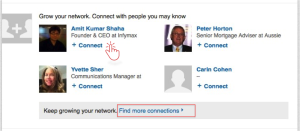
So, as a sender – it’s very easy to send connections requests (invitations). But we must always think of the recipient of that invitation, and how do they perceive the value of the “easy-to-send” invitation.
Personally, I’m getting 4-6 invitations per day (!). 90% of the time, I will receive this message:
Hi Raz,
I’d like to connect with you on LinkedIn.
Now, there are two points of view for recipients of such invitations, on how to react: to respond or not? Should I accept this invitation or not?
Before I’ll give my personal preference, I’ll share some of the most common remarks I hear:
in online and real-world networking, the same principle applies: You never know when you might make a crucial connection.
Or:
every connection can be a business opportunity
In 1973, sociologist Mark Granovetter published a classic paper called “The Strength of Weak Ties,” which found that social capital, i.e. “who you know”, was nearly three times more effective in finding people jobs than “formal means” such as Help Wanted ads and recruiters. And most of the time, jobs were found not through close friends and relatives but through casual acquaintances, neighbours, and other “weak ties”.
Leveraging weak ties, Granovetter concluded, allows us to tap into knowledge not available in our inner circle, which tends to be composed of people like ourselves. Because weak ties lack trust, we cannot lean on them too heavily. But if we respect the nature of the relationship, these ties can extend our reach far beyond the contexts and communities we know best.
Coming from a well-respected 40-year-old research (WAY before the internet and LinkedIn), really makes you think about our culture, and whether technology has had any impact on the way society behaves today. The research clearly is talking about human nature in general, and not about using an online network, but many people (in academia and business) keep referring to this research, so there must be some truth to it.
I consider myself as an open-minded individual, so I’m open to hear all points of view. I don’t have to agree to them, but I’m willing to seriously consider the merits of all arguments, and then make a better-informed decision.
I used to have a well-defined view of “stock standard” invitations or connection requests from random people (i.e. people I don’t know, or have no way of knowing): I ignore, and click on “I don’t know this person”, knowing full well that if I’m the third person to do so, they won’t be able to send anymore invitation without having the person’s email address.
Now, my approach is a bit softer:
I look at the profile of each person who sends me an invitation. I will only automatically accept those stock-standard invitations from people I already know. If I don’t know the person at all, I will send a quick question:
Hi [first name]:
I don’t believe we’ve met, but thanks for your invitation! How can I add value to you and your network?
I’ll normally wait 24-48 hours for a response, and if I don’t get one – I’ll ignore the request.
If this simple question starts an interesting conversation, I’d likely to invite the person for a coffee, or a chat (phone / Skype – depends on location). Only after that conversation I’ll accept the invitation. At least now we can claim we know something about each other, and the connection become of value. Weak tie, but valuable!
Remember the “network effect” I mentioned at the beginning of this post? I would also report fake accounts to LinkedIn, flag them as spam accounts, and have them removed, for the betterment of the LinkedIn community. These accounts need to be exposed and reported, to help the majority of honest members make the most out this fantastic business network.